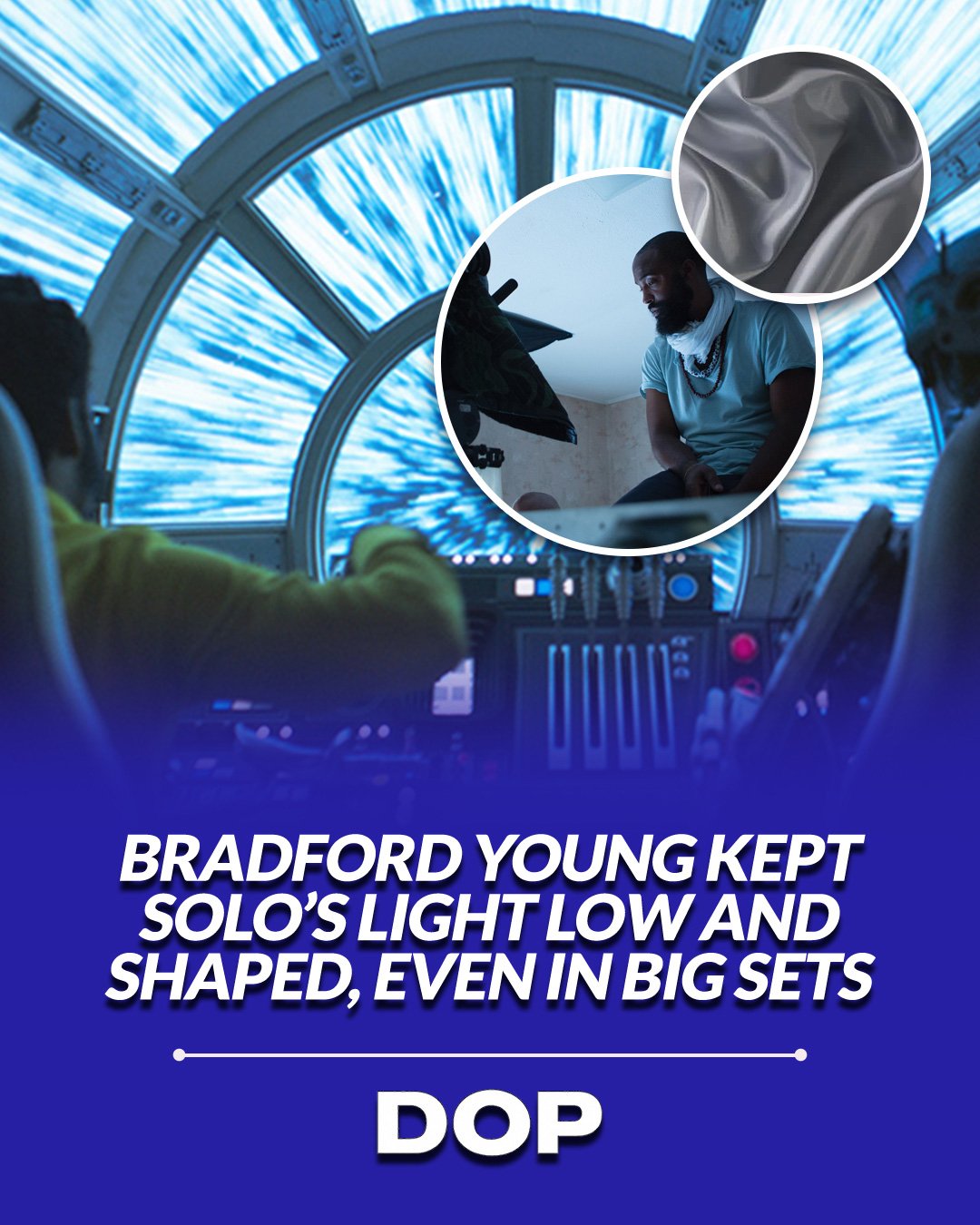
When Bradford Young signed on to shoot Solo: A Star Wars Story, it was clear he wasn't interested in simply replicating the pristine, brightly lit aesthetic often associated with the galaxy far, far away. Instead, Young, known for his masterful work in films like Arrival and Selma, brought his signature approach to naturalistic, low-light cinematography, fundamentally grounding the sprawling Star Wars universe in a grittier, more tactile reality. His work on Solo stands as a powerful testament to the creative courage required to re-envision an iconic franchise, proving that discipline in darkness can yield profound visual impact.
Young's visual philosophy for Solo hinged on working at the very edge of exposure. This wasn't about underexposing for the sake of moodiness; it was a deliberate choice to sculpt with light, allowing shadows to define spaces and characters. Many scenes feel less like they're bathed in the traditional broad key lights of blockbuster cinema and more like they're illuminated by the sparse, motivated sources inherent to the narrative: the flickering glow of a cockpit panel, the narrow shaft of light from a distant window slit, or the dancing warmth of a campfire. This granular approach to lighting immediately immerses the audience in the tight confines of a smuggler's ship or the murky depths of an industrial loading bay, making the fantastical feel palpably real.
The Art of Motivated Darkness
The technical execution of this vision involved a meticulous interplay of large soft bounces to create ambient fill and small, precisely placed practicals or motivated sources to carve out detail. Rather than fighting the inherent darkness, Young embraced it, allowing large portions of the frame to fall into deep shadow. This technique isn't merely aesthetic; it's deeply psychological. It creates a sense of intimacy and vulnerability for the characters, forcing the audience to lean in, to search for details. It also amplifies the feeling of danger and the precariousness of their existence, a fitting backdrop for a young Han Solo finding his way in a morally ambiguous galaxy.
"Young's approach reminds us that true cinematic impact often lies not in what you illuminate, but in what you choose to conceal."
His lens choices, likely favoring faster, more sensitive glass to maximize available light, would have been crucial here. While specific camera and lens packages for Solo included ARRI Alexa 65 and Mini with Panavision anamorphic lenses, Young's true artistry lies in how he used these tools to capture and shape light, or rather, the absence of it. The anamorphic format itself lends a cinematic breadth, but it's the interplay of light and shadow within that frame that truly defines the film's look. The inherent fall-off and character of anamorphic lenses would have further enhanced the organic, slightly imperfect texture of his low-light environments.
Shadow as a Storytelling Tool
One of the most striking effects of Young's commitment to darkness is how it elevates the impact of highlights. When a character's face emerges from shadow, when the metallic sheen of a spaceship's hull catches a glint of light, or when a prop in the foreground is subtly illuminated, these elements gain an extraordinary visual weight. They become focal points, drawing the eye precisely where the cinematographer intends. This selective illumination creates a dynamic visual hierarchy, guiding the viewer's attention and enhancing the narrative beats.
This philosophy stands in stark contrast to the often brightly lit, high-key environments of many franchise films, where every detail is visible. Young's work on Solo is a powerful counter-argument, asserting that ambiguity and suggestion can be far more compelling than overt clarity. It's a masterclass in using negative space and controlled darkness to build atmosphere, define character, and propel the story forward. For cinematographers navigating the demands of large-scale productions, Young's Solo serves as an invaluable reminder: even within the confines of established franchises, there is immense creative freedom to be found by pushing boundaries and embracing a distinctive visual language. His work proves that a disciplined approach to low-light aesthetics can not only ground fantastical worlds but also elevate them into something profoundly artful and memorable.
This article contains affiliate links. We may earn a small commission at no extra cost to you. Learn more.