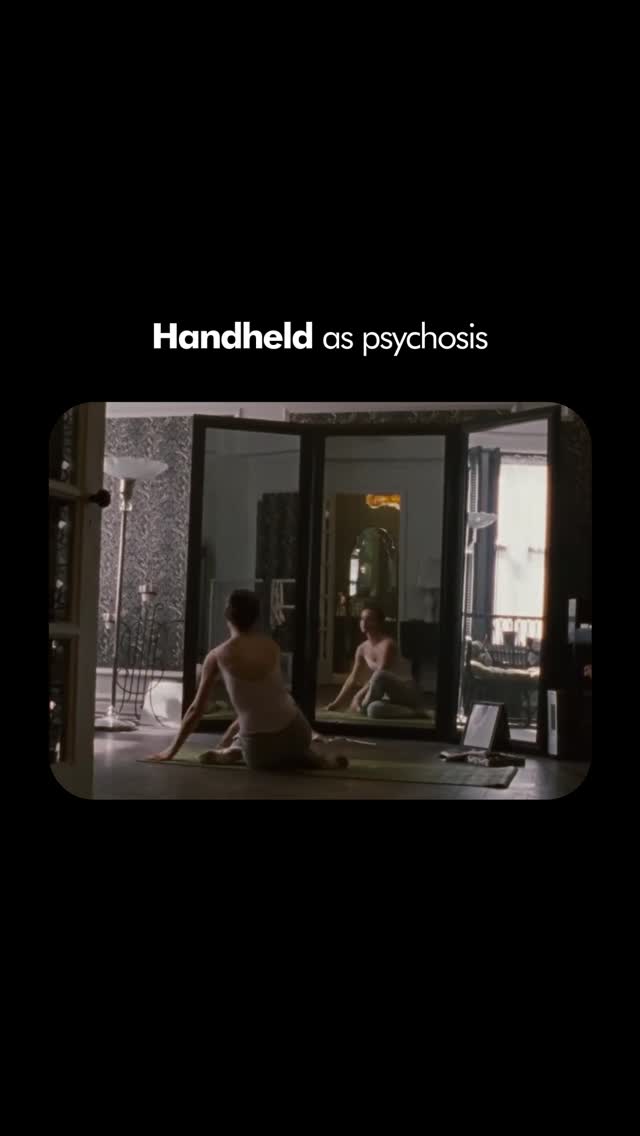
Darren Aronofsky’s 2010 psychological thriller, Black Swan, remains a masterclass in visual storytelling, thanks in no small part to the extraordinary cinematography of Matthew Libatique. This isn't just a film about ballet; it's a terrifying, visceral exploration of artistic obsession, identity, and the fragility of the human psyche. Libatique's camera doesn't merely observe Nina Sayers' (Natalie Portman) descent into madness; it actively participates, becoming an extension of her fractured perception.
The film’s aesthetic is immediately striking for its raw intimacy, largely achieved through extensive use of handheld camerawork. This isn't the slick, stabilized handheld often seen in action films; this is a deliberately shaky, almost breathy, technique that mirrors Nina's increasingly erratic emotional state. The camera is rarely still, constantly pushing in, pulling back, or circling Nina, creating a suffocating sense of claustrophobia. This handheld approach is particularly effective in the rehearsal scenes, where the camera dances with Nina, embodying her physical exertion and the intense pressure she feels. It’s a technique that blurs the line between subjective and objective reality, forcing the audience to experience Nina’s world through her increasingly unreliable eyes.
The Unflinching Gaze: Locking onto Portman
One of the most profound aspects of Libatique’s work in Black Swan is the relentless focus on Natalie Portman. The camera, in its handheld fluidity, is almost always locked onto Nina, often in extreme close-ups that leave nowhere for her, or the audience, to hide. This constant proximity allows us to witness every subtle tremor, every flicker of doubt, every burgeoning delusion on Portman’s face. It’s a brave and demanding choice for an actor, and Portman delivers a performance that justifies such an unblinking gaze. This technique fosters a deep, albeit unsettling, empathy, drawing us into Nina's internal turmoil with an almost invasive intimacy. The camera becomes her shadow, her tormentor, her only confidante.
“The handheld as psychosis approach in Black Swan isn't just a stylistic choice; it's a narrative device, making the audience complicit in Nina's unraveling.”
Libatique’s choice of the Super 16mm film format was instrumental in achieving the film’s distinctive texture and grittiness. In an era increasingly dominated by digital, the decision to shoot on 16mm lent an organic, almost tactile quality to the visuals. The inherent grain of the film stock adds a layer of rawness and imperfection that perfectly complements Nina’s deteriorating mental state. It's a subtle yet powerful effect, contributing to the film's dreamlike, sometimes nightmarish, atmosphere. This grain, combined with the often desaturated color palette, evokes a sense of decay and psychological unease, making the beautiful world of ballet feel increasingly sinister.
Reflections of a Fractured Self
Mirrors are a pervasive motif throughout Black Swan, and Libatique uses them with chilling precision. They are not merely props; they are vital narrative elements that underscore Nina's fractured identity and her battle with her darker self. The film is replete with shots of Nina confronting her reflection, and often, those reflections behave in ways that defy reality. A quick glance might show a reflection moving independently, or a shadow appearing where there shouldn't be one. Libatique masterfully frames these moments, often using shallow depth of field to isolate Nina and her reflection, making the audience question what is real and what is a hallucination.
The lighting in Black Swan is equally intentional. While the ballet scenes often feature stark, theatrical lighting that emphasizes performance and artifice, Nina's personal spaces are often bathed in a cooler, more naturalistic light that gradually gives way to shadows and more expressionistic, unsettling illumination as her psychosis deepens. Notice the subtle shifts in color temperature and intensity as Nina’s grip on reality loosens. Libatique understands that light and shadow are not just about visibility; they are powerful tools for conveying mood, character, and psychological states.
Libatique's collaboration with Aronofsky extends beyond Black Swan, with a filmography that includes Requiem for a Dream, The Fountain, and Mother!. Across these diverse projects, a consistent thread is his ability to craft visuals that are deeply intertwined with the psychological core of the story. In Black Swan, he masterfully wields the camera as a weapon of psychological warfare, making us feel every tremor of Nina’s inner world. The film stands as a testament to the power of cinematography to transcend mere image-making and become an integral part of the narrative itself, leaving an indelible mark on the audience long after the credits roll.