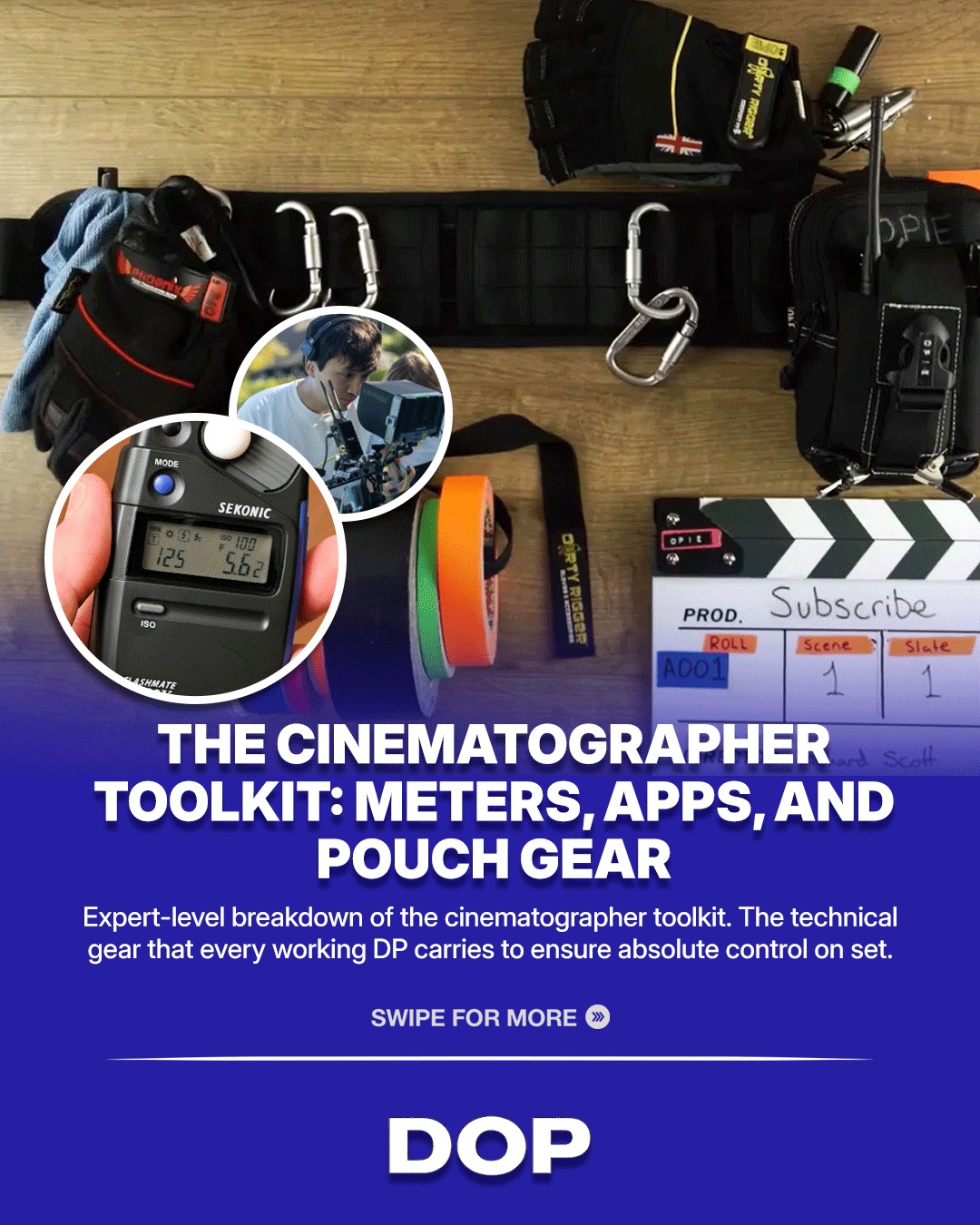
In an industry often obsessed with the latest and greatest camera bodies, anamorphic glass, and cutting-edge lighting fixtures, it's easy to overlook the foundational tools that underpin every great cinematic image. The Instagram post provocatively reminds us that the working Director of Photography (DP) often carries a surprisingly modest array of physical instruments, complemented by a powerful suite of digital applications. These aren't the items that make the sizzle reel, but they are the silent architects of precision, consistency, and ultimately, artistic vision. Their collective power lies not in their individual cost, but in the invaluable data and foresight they provide, preventing costly reshoots and ensuring creative intent translates flawlessly to the screen.
The Analog Pillars: Precision in Hand
At the heart of the physical toolkit is the Sekonic L-858D incident light meter. This isn't merely a device for calculating exposure; it's a critical instrument for understanding light ratios, dynamic range, and the interplay of highlights and shadows. A seasoned DP uses an incident meter not just to set an F-stop, but to sculpt light, ensuring that key elements fall within the sensor's optimal range while still achieving desired contrast and mood. Paired with this is the color temperature meter, an equally vital piece of kit for maintaining color consistency across setups and locations. While cameras are increasingly adept at auto white balance, a dedicated meter provides the objective data needed to precisely match practical lights, HMI sources, and LEDs, avoiding the subtle color shifts that can plague a scene and disrupt visual continuity. This meticulous approach to color science, often championed by DPs like Roger Deakins, ASC, BSC, ensures a clean canvas for grading, allowing the colorist to focus on enhancing the look rather than correcting fundamental inconsistencies.
"The tools that live in the DP's pocket cost under $2,000. The decisions they catch before you shoot cost nothing to undo."
The humble tape measure, often scoffed at by newcomers, remains an indispensable component. Whether for precise focus pulling, blocking actors, or even measuring light-to-subject distance for falloff calculations, its accuracy is paramount. In an era of LIDAR and advanced autofocus, the physical act of measuring still provides a tactile understanding of spatial relationships that no digital readout can fully replicate. And finally, the loupe, a simple magnifying glass used to inspect film negatives or, more commonly today, to scrutinize monitor images for focus, grain, and subtle nuances. Before the advent of high-resolution on-set monitors, the loupe was the DP's final arbiter of image quality, and its principle of meticulous examination remains relevant, fostering a critical eye for detail.
The Digital Augmentation: Pre-Visualization and Planning
While the physical tools ground the DP in the tangible realities of light and space, the smartphone has become an equally powerful extension of the toolkit. Apps like Artemis provide invaluable lens pre-visualization, allowing DPs to quickly scout locations and frame shots using various focal lengths, simulating the field of view of different sensor sizes. This saves precious time during location scouts and tech rehearsals, enabling DPs to communicate their vision more effectively to directors and production designers. Imagine being able to walk through a location with your director and instantly show them what a 28mm lens on an ARRI Alexa Mini LF would see, or how a 75mm anamorphic would compress the background. This foresight is invaluable, allowing for early adjustments to set dressing, blocking, and even location choices, long before a single piece of camera equipment is unloaded.
Complementing Artemis is pCAM, or similar depth of field calculators. These apps are not just for determining how much of the background will be blurry; they are sophisticated tools for understanding the precise creative implications of aperture, focal length, sensor size, and subject distance. A DP can use pCAM to calculate hyperfocal distance for deep focus shots, or to precisely control the falloff of focus for a dramatic rack focus. This level of technical understanding allows for deliberate artistic choices, ensuring that depth of field serves the narrative and emotional beats of the story, rather than being a happy accident. DPs like Emmanuel Lubezki, ASC, AMC, known for his deep focus work and long takes, would undoubtedly appreciate the precision these tools offer in planning complex shots.
The combination of these analog and digital tools speaks to the evolving nature of cinematography. It's a craft that demands both an intuitive artistic sensibility and a rigorous technical foundation. The physical tools provide the fundamental data and tactile understanding of light and space, while the digital applications offer powerful pre-visualization and planning capabilities. Together, they form a comprehensive system for mitigating risks, optimizing workflows, and ultimately, empowering the DP to translate their artistic vision into a compelling visual reality. The true cost of these tools pales in comparison to the value they bring in preventing costly mistakes and ensuring the integrity of the cinematic image from conception to capture.
In essence, the DP's pouch and digital arsenal represent a philosophy: one of preparedness, precision, and proactive problem-solving. They embody the understanding that great cinematography isn't just about what's in front of the lens, but about the meticulous planning and technical mastery that ensures every frame is intentional. As the industry continues to innovate with new camera technologies, these fundamental tools and the principles they represent will remain the bedrock of excellent visual storytelling, a testament to the enduring craft of the Director of Photography.
This article contains affiliate links. We may earn a small commission at no extra cost to you. Learn more.