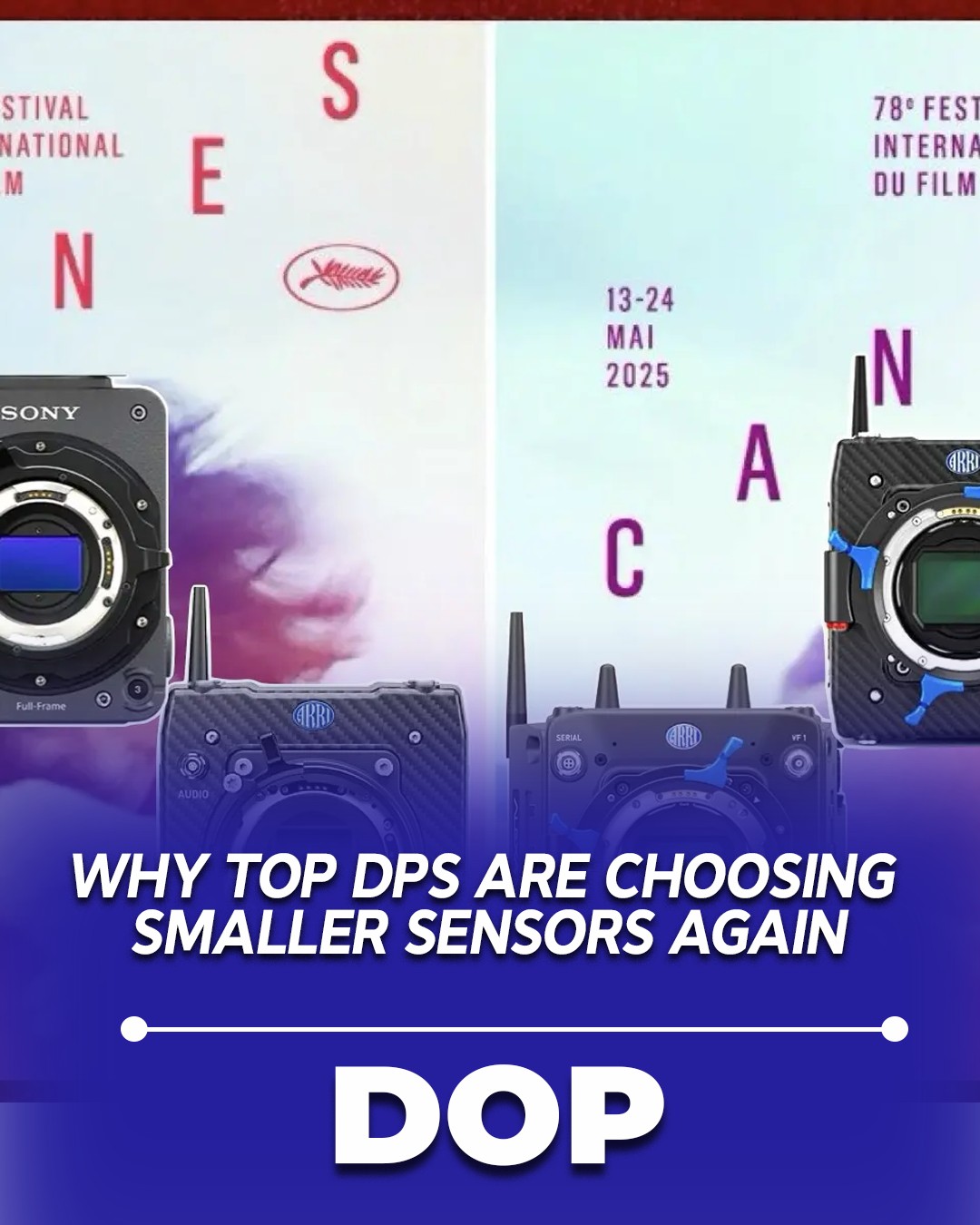
For the past decade, the cinematography community has been locked in an ongoing debate regarding sensor formats. The rapid ascent of large-format systems, led by flagships like the ARRI Alexa Mini LF, Sony Venice 2, and RED V-Raptor, has reshaped visual expectations across features and high-end television. Yet, despite the marketing momentum driving larger silicon, Super 35 remains a resilient, deeply capable standard that continues to anchor iconic visual styles.
Large format, roughly equivalent to the traditional VistaVision field of view, fundamentally alters the geometry of a scene. By utilizing a wider focal length to achieve the same field of view as Super 35, large-format sensors produce a distinct visual character. The focal length properties remain intact while capturing a broader perspective, yielding a shallow depth of field that isolates subjects with surgical precision. When paired with modern high-resolution sensors, this look offers a tactile, three-dimensional presence where background separation feels effortless and skin tones render with incredible dynamic softness.
The Optical Legacy and Flexibility of Super 35
Despite the allure of large-format depth control, Super 35 holds an irreplaceable position in cinema history. For over a century, motion picture lenses were engineered specifically around the Super 35 (and standard 35mm) image circle. Choosing Super 35 opens up an unparalleled archive of character-rich glass: vintage Cooke Speed Panchros, Zeiss Super Speeds, Kowa Prominars, and legendary anamorphic options that simply cannot illuminate a full-frame sensor without optical expanders or heavy vignetting.
Furthermore, Super 35 offers a practical depth of field that serves specific storytelling needs. In ensemble scenes or complex camera moves where focal planes are constantly shifting, the extra depth provided by Super 35 gives directors and focus pullers crucial breathing room. Not every story benefits from a completely melted background; often, environmental context and production design are vital narrative components that demand clarity within the frame.
A larger sensor doesn't make an image inherently more cinematic; it simply changes the optical dialogue between your glass, your talent, and the space they inhabit.
Practical Realities: Glass, Weight, and Data Pipelines
Beyond aesthetics, a cinematographer's choice of format dictates the operational reality on set and in post-production. Large-format cinema lenses, particularly fast zooms and high-performance primes, are often significantly heavier and larger than their Super 35 counterparts. On demanding handheld, Steadicam, or gimbal setups, camera weight directly influences operator endurance and shot fluid dynamics.
Post-production pipelines also face massive implications. Capturing uncompressed 6K or 8K large-format RAW generates enormous data footprints. While downsampling high-resolution large-format images into a 4K master yields exceptional noise reduction and detail, it requires robust archival pipelines, faster drive arrays, and increased computing power that can strain mid-budget productions.
Format as an Intentional Storytelling Tool
Master cinematographers like Roger Deakins ASC BSC and Greig Fraser ASC ACS have demonstrated that sensor choice should never be driven by dogmatic adherence to trends. Deakins embraced large format on 1917 to create an immersive, wide-angle proximity to character, whereas Fraser frequently blends format options, optical mediums, and even digital-to-film transfers to craft specific textual textures.
Ultimately, the industry is moving away from the simplistic view that larger always equals better. The modern Director of Photography views sensor size not as a badge of quality, but as an aesthetic variable, much like film stock selection in previous eras. Whether choosing the classical rendering and expansive glass library of Super 35 or the dimensional immersion of large format, the ultimate metric remains how effectively the image serves the narrative.
This article contains affiliate links. We may earn a small commission at no extra cost to you. Learn more.