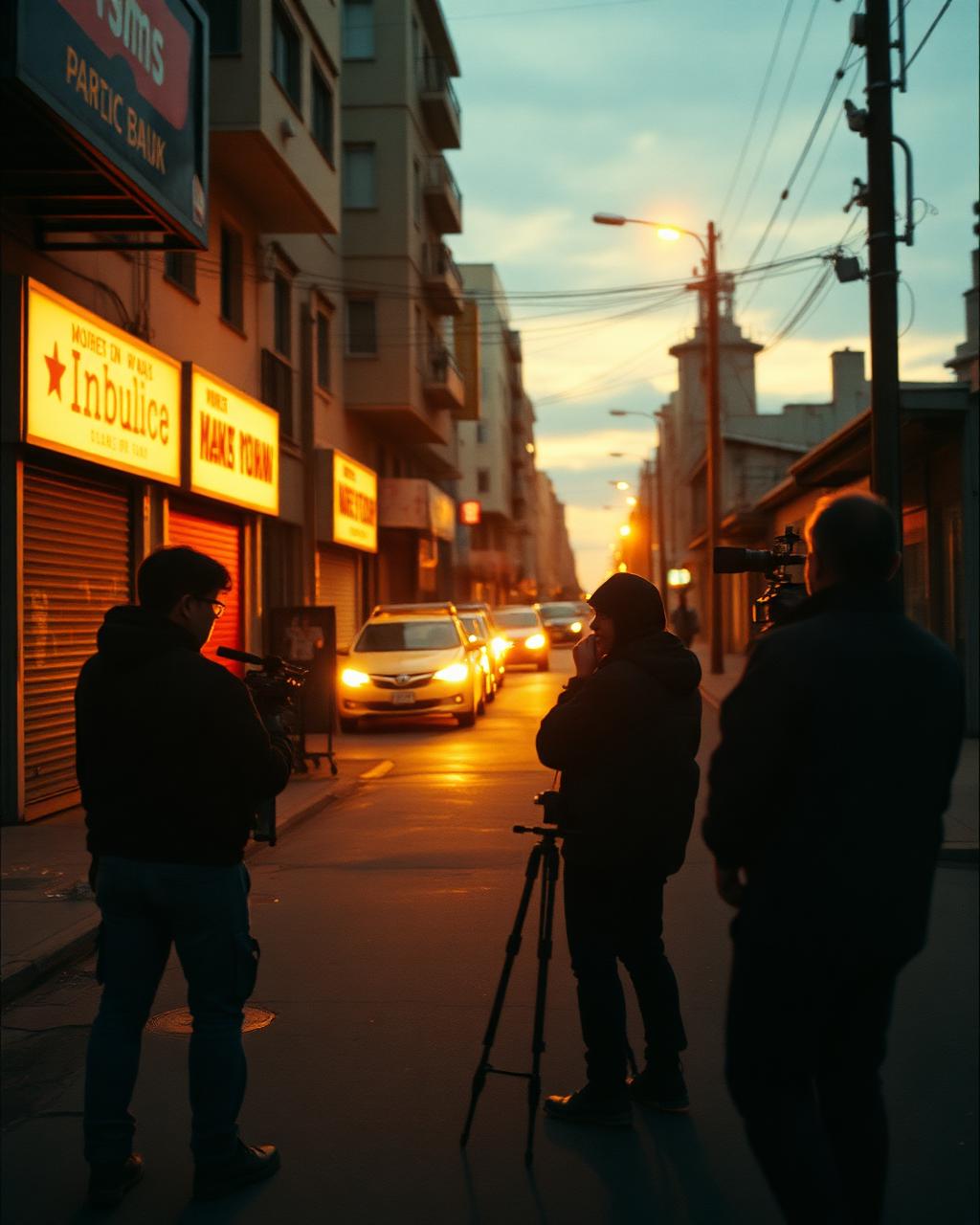
Benjamin Loeb and director Kogonada arrived in Hong Kong with a crew of seven, no completed script, and a plan to shoot for three weeks. They scouted locations one day and shot them the next. The result is Zi, premiering in the NEXT section of Sundance 2026, a film that feels like a love letter to Wong Kar-wai filtered through the actual, unglamorous reality of contemporary Hong Kong. The approach wasn't guerrilla in the romantic sense—it was guerrilla in method, necessity, and precision.
Loeb has shot all of Kogonada's narrative features: Columbus (2017) and After Yang (2021) led to this third collaboration. In an interview at the Roger Ebert site, Loeb described the production philosophy: 'Most of this film, in a weird synchronous way, presented itself to us.' This is an essential statement about how to work without a script. The camera becomes reactive rather than pre-planned. Locations suggest compositions. Compositions suggest camera positions. Movement becomes dialogue.
For Zi, Loeb chose a boxy aspect ratio and leaned heavily into shadows and fluorescent lights for the nighttime sequences. He had to avoid the default exoticism that foreign productions fall into when shooting Hong Kong—the neon glamour, the postcard compositions, the visual clichés. Instead, he shot noodle shops and cemeteries and covered walkways lit by whatever practical sources existed there. The protagonist wanders through the city; the camera follows, refusing to beautify.
Variety described Loeb as 'picking out small pools of colour in the urban grayscale.' This precise language—pools, not floods, of color—captures what the cinematography actually does. The boxy aspect ratio (neither widescreen nor square, but vertically emphasized) creates a frame that feels claustrophobic, urban, enclosed. The fluorescent sources create separation between figure and background without making either legible. The character is lost. The city does not resolve that loss with beauty.
Handheld throughout, the camera alternates between uncomfortably close shots and extreme wides, never settling into a conventional coverage pattern. This is practical (the crew was small, locations were unpredictable) but it's also thematic. The protagonist has no fixed position in the world. Neither does the camera. The instability is the point.
For cinematographers interested in how to work under constraint, how to let location and practical sources dictate the visual approach rather than imposing a pre-conceived style, Loeb's work on Zi is essential study. The three-week timeline was not a limitation overcome; it was a methodology that produced the visual character of the film. The lack of script was not a problem to solve; it was a production philosophy that made reactive, observational cinematography not just possible but necessary.
Loeb and Kogonada landed in Hong Kong, walked for three days, then started shooting. That is not an accident. That is a production philosophy.
Gear Recommendations
- Atlas Lens Co. Orion 2x Anamorphic | Adorama – B&H Photo
- Vazen 40mm 1.8x Anamorphic | Adorama – B&H Photo
- DJI RS 4 Pro Gimbal – Amazon
- Easyrig Vario 5 | Adorama – B&H Photo
- Blackmagic Pocket Cinema Camera 6K Pro | Adorama – B&H Photo
Note: Links above are affiliate links. Occupy Cinematography may earn a commission on qualifying purchases at no additional cost to you.