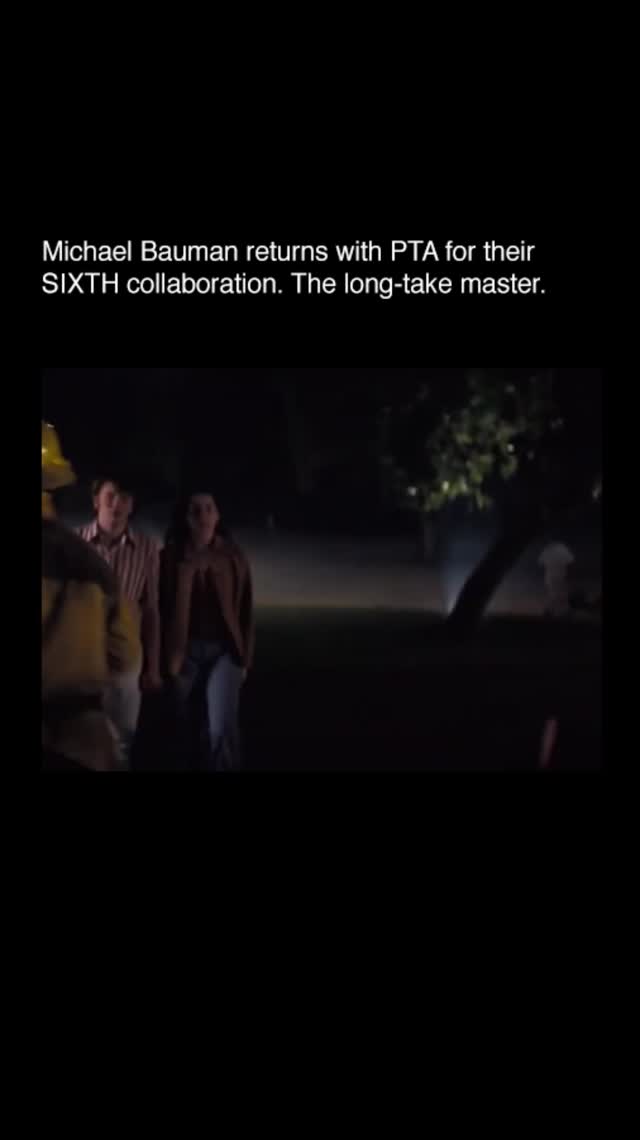
Michael Bauman's recent Cinematography nomination for One Battle After Another is not just an acknowledgment of a single film's visual brilliance; it's a testament to a profound and evolving partnership with director Paul Thomas Anderson. This marks their sixth collaboration, a cinematic journey that began with Bauman as a camera operator on the searing landscapes of There Will Be Blood. From those early, intense frames, a unique visual language has been forged, culminating in the immersive, meticulously choreographed worlds we see today. Bauman's ascent to PTA's go-to cinematographer is a story of trust, shared vision, and a relentless pursuit of cinematic authenticity.
The hallmark of their collaboration, and indeed Bauman's signature, is the audacious and often breathtaking long take. This isn't merely a stylistic flourish; it's a deeply philosophical approach to filmmaking that prioritizes immersion and performance over conventional coverage. In an era often dominated by rapid-fire edits and fractured perspectives, Bauman and Anderson consistently choose to hold the frame, allowing scenes to breathe, characters to inhabit their spaces fully, and audiences to become truly embedded in the narrative flow. This technique demands an extraordinary level of precision, from the actors' blocking to the camera's intricate dance, every element must be perfectly synchronized.
The Evolution of a Visual Partnership
Bauman's journey with Anderson is a masterclass in how a cinematographer can grow with a director, pushing boundaries and refining a shared aesthetic. His early work on films like The Master showcased a keen eye for period detail and a powerful command of light and shadow, often employing naturalistic sources to create a sense of lived-in authenticity. As their partnership deepened, particularly through films like Inherent Vice and Phantom Thread, we saw Bauman’s long takes evolve from impressive technical feats to essential narrative tools, serving to deepen character interaction and expand the emotional landscape of each scene. The camera became less an observer and more an active participant, guiding the audience's gaze with subtle, often imperceptible movements.
The technical demands of such an approach are immense. On Licorice Pizza, Bauman famously employed custom-built camera rigs to achieve the film's fluid, almost dreamlike tracking shots through 1970s San Fernando Valley. These bespoke solutions underscore his commitment to achieving Anderson's vision, often requiring innovative engineering to allow the camera to move seamlessly through tight spaces or maintain impossible perspectives. This dedication to craft extends to his choice of optics and camera systems. While specific details for One Battle After Another are still emerging, Bauman has historically favored a combination of anamorphic and spherical lenses, often utilizing vintage glass to impart a specific character and warmth to the image. His preference for large format sensors, when applicable, also contributes to the immersive quality, offering a shallower depth of field that isolates subjects while maintaining a rich, detailed background.
“Bauman’s long take isn't merely a stylistic flourish; it's a deeply philosophical approach to filmmaking that prioritizes immersion and performance over conventional coverage.”
Choreographing Immersion: One Battle After Another
One Battle After Another continues this tradition of extended, meticulously choreographed shots, further cementing Bauman's reputation as a master of cinematic flow. The nomination highlights not just the beauty of individual frames, but the cumulative impact of his sustained visual storytelling. These aren't just 'oner' shots for show; they are carefully constructed sequences designed to draw the viewer deeper into the emotional and psychological landscape of the film. The camera becomes a breathing entity, a silent character moving in harmony with the actors, observing, revealing, and guiding our attention with understated grace.
The meticulous planning involved in these sequences is staggering. It requires intense collaboration with the production design team to ensure environments are built for camera movement, with the actors for precise blocking, and with the lighting department to ensure consistent and dynamic illumination throughout the take. Bauman's lighting philosophy often leans towards practicals and motivated sources, enhancing the realism and allowing the long take to feel organic rather than overtly artificial. His color science, too, is often understated, aiming for a naturalistic palette that supports the narrative without drawing undue attention to itself, allowing the performances and the inherent drama of the scene to take center stage.
Ultimately, Michael Bauman's work on One Battle After Another, and indeed his entire filmography with Paul Thomas Anderson, stands as a powerful argument for the enduring power of thoughtful, deliberate cinematography. His long takes are not just technical achievements; they are acts of profound storytelling, inviting audiences to step into the film's world with an unparalleled sense of intimacy and presence. This nomination is a well-deserved recognition of a cinematographer who consistently pushes the boundaries of his craft, always in service of the story and the immersive cinematic experience.
This article contains affiliate links. We may earn a small commission at no extra cost to you. Learn more.