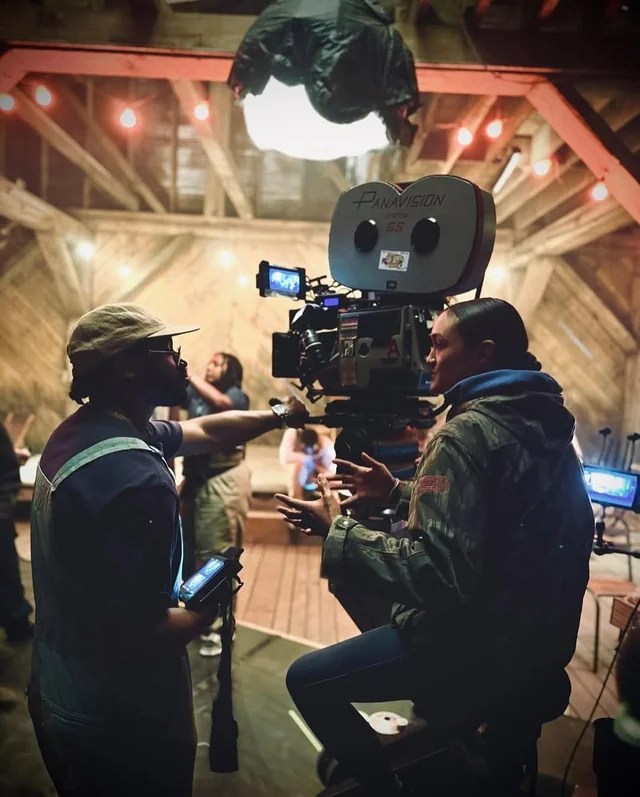
The Academy Awards, for all their pomp and circumstance, occasionally deliver moments that transcend the glitz and genuinely reshape the landscape of cinema. The 2026 ceremony, with Autumn Durald Arkapaw's groundbreaking win for Best Cinematography for Ryan Coogler's Sinners, was precisely one such moment. Not only did Arkapaw become the first woman in the 96-year history of the Academy to claim this coveted prize, but she also made history as the first woman of color to do so. Her triumph isn't just a win for diversity; it's a profound validation of a visual philosophy rooted in tactile authenticity, bold technical execution, and an almost spiritual connection to the story's emotional core.
Arkapaw's filmography, which includes evocative works like Palo Alto, Mainstream, and the visually arresting Loki series, has consistently demonstrated a keen eye for character-driven narratives and a willingness to push aesthetic boundaries. With Sinners, however, she ascended to a new echelon. The film, a critical and commercial darling grossing over $200 million, wasn't just a story; it was an immersive experience, largely thanks to Arkapaw's masterful lensing. Her choice of IMAX 65mm wasn't merely a flex; it was a deliberate artistic decision, demanding a physical commitment that few DPs would undertake. The image of Arkapaw, a petite figure, shouldering a 65-pound IMAX camera through the challenging terrains of the Mississippi Delta speaks volumes about her dedication and the visceral, almost primal connection she forged with the material.
The Tactile Language of Light and Location
The visual philosophy of Sinners was overtly practical, eschewing green screens and artificiality for the raw, untamed beauty of its on-location shoots. Arkapaw's lighting strategy was intimately tied to this authenticity. She leaned heavily into source-motivated lighting, particularly the flickering, organic glow of firelight, to define the film's mood and texture. This wasn't merely about aesthetic appeal; it was about grounding the narrative in a tangible reality, allowing the natural environment to become a character in itself. The Mississippi Delta, with its humid air, dense foliage, and unique quality of light, was not just a backdrop but an active participant in the storytelling. Arkapaw's ability to harness this natural light, augment it subtly with practicals, and then translate it onto the expansive IMAX frame is a testament to her profound understanding of light's psychological impact.
"A lot of little girls that look like me will sleep really well tonight."
Her technical approach married the grandeur of IMAX with an intimate, almost documentary-like sensibility. The massive sensor of the IMAX 65mm camera, likely a Panavision Panaflex System 65 Studio or an ARRI Alexa 65, allowed for unparalleled resolution and shallow depth of field, rendering the Delta's textures – the sweat on skin, the rough bark of trees, the shimmer of water – with breathtaking fidelity. The choice of lenses, while not publicly detailed, undoubtedly leaned towards those that offered both sharpness and a pleasing fall-off, allowing for the wide, expansive shots characteristic of IMAX while still maintaining a human intimacy in close-ups. Her color science, too, would have been meticulously crafted to capture the specific hues of the Delta – the deep greens, the muddy browns, the hazy blues of the sky – allowing them to breathe on screen without feeling overly saturated or artificial.
Redefining the DP's Role
Arkapaw's triumph is more than a personal achievement; it's a clarion call to the industry. Her willingness to embrace the physical demands of large-format cinematography, to immerse herself fully in the environment, and to prioritize story above all else, sets a new standard. The narrative around Sinners consistently highlighted how central the cinematography was to the film's very essence. It wasn't an embellishment; it was the foundation upon which Coogler built his vision. This collaborative synergy, where the DP is not just an executor but a co-author of the visual narrative, is a hallmark of truly great cinema.
Her win, and the subsequent impact of Sinners, underscores the growing recognition that diverse voices behind the camera enrich the cinematic tapestry in immeasurable ways. Arkapaw's perspective, informed by her unique experiences, undoubtedly contributed to the film's profound resonance. She didn't just light scenes; she imbued them with soul, reflecting the very human struggles and triumphs depicted in the story. This isn't about tokenism; it's about expanding the visual language of film, bringing new sensibilities and approaches to the craft.
The legacy of Autumn Durald Arkapaw's win will extend far beyond a single golden statuette. It will inspire a generation of aspiring cinematographers, particularly women and people of color, to pursue their passion with unwavering conviction. Her words, "a lot of little girls that look like me will sleep really well tonight," resonate deeply, signaling a seismic shift in an industry that has historically been slow to recognize talent beyond a narrow demographic. Her achievement isn't just about breaking barriers; it's about forging new paths, proving that the most powerful images often come from those who dare to see the world differently, and who are willing to haul a 65-pound camera through mud and sweat to share that vision with the world.