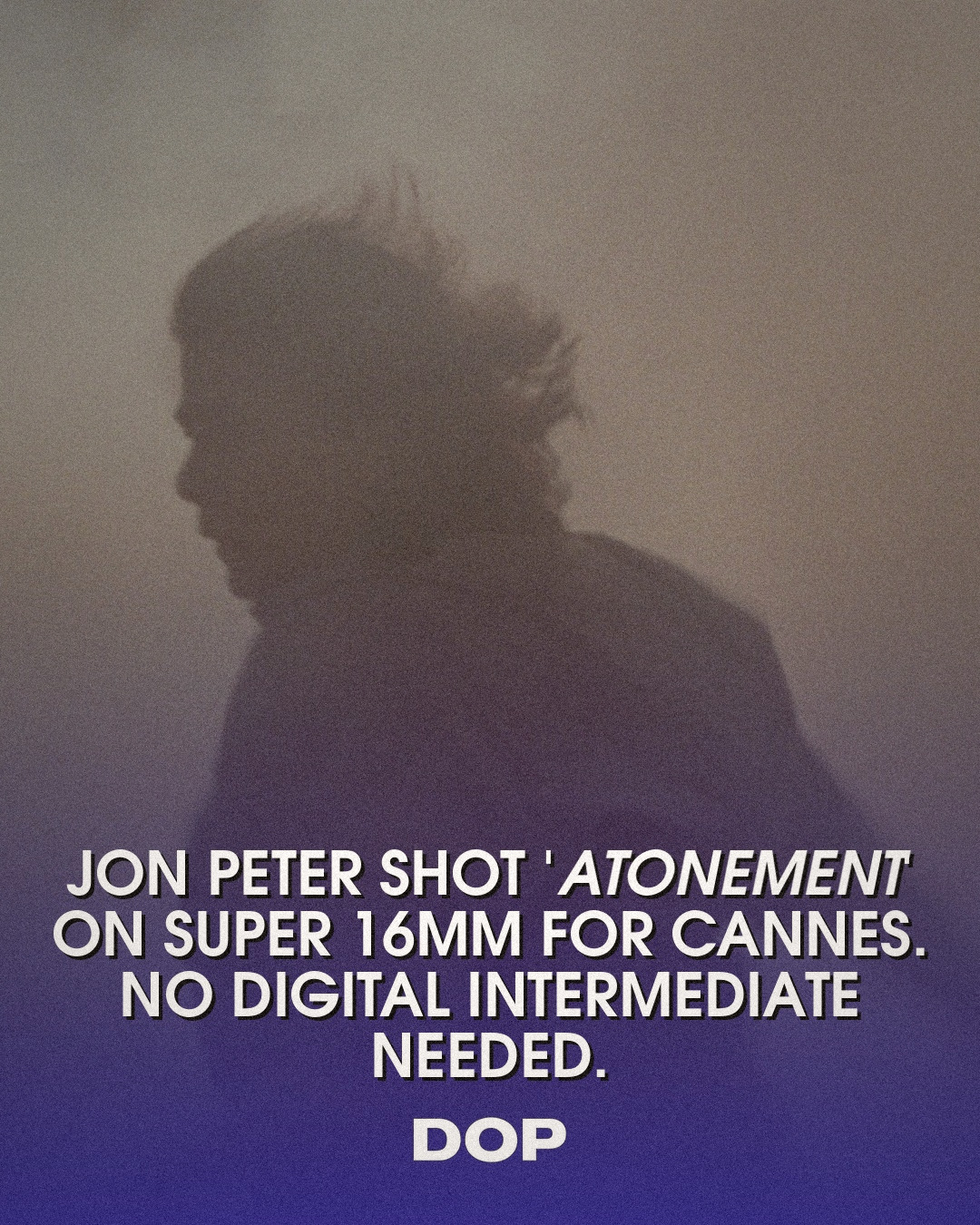
In an era increasingly dominated by pristine digital capture, where the pursuit of clinical perfection often overshadows organic texture, the announcement of Reed Van Dyk’s directorial debut, 'Atonement,' sent a ripple of excitement through the cinematography community. Shot entirely on Super 16mm film, utilizing the venerable ARRI 416 camera, Kodak’s revered 250D and 500T stocks, and a full suite of ARRI Ultra16 prime lenses, the film's premiere at the Directors' Fortnight section of the 2026 Cannes Film Festival was not just a cinematic event, but a powerful statement on the enduring artistry of celluloid.
Director of Photography Jon Peter, in collaboration with Van Dyk, made a bold and deliberate choice to anchor the war drama in the tactile, evocative world of 16mm. This wasn't merely a stylistic flourish; it was a foundational decision that shaped the very DNA of the film's visual language. The inherent grain structure of Super 16mm, particularly when pushed and pulled, offers a rich, organic quality that digital emulation, however sophisticated, struggles to replicate with authenticity. This natural texture, woven intrinsically into the image, becomes more than just an aesthetic; it’s a narrative tool, conveying the grit, rawness, and historical weight demanded by a war drama starring talents like Kenneth Branagh, Boyd Holbrook, and Hiam Abbass.
The Uncompromised Vision of Celluloid
The decision to forgo a digital intermediate (DI) for 'Atonement' speaks volumes about the filmmakers’ commitment to their vision. By shooting on film, the grain and texture were baked into the negative from the outset, eliminating the need for post-production trickery to achieve a desired 'film look.' This approach streamlines the color grading process, allowing the focus to remain on enhancing the natural characteristics of the film stock rather than fabricating them. The Kodak 250D, known for its fine grain and excellent latitude in daylight conditions, and the more robust 500T, famed for its low-light performance and distinctive grain, provided Peter with a versatile palette. The ARRI Ultra16 primes, designed specifically for the format, ensured optical precision while retaining the subtle imperfections and character that distinguish film lenses from their often sterile digital counterparts.
"The entire look of the film was built around what the format could deliver in-camera. It's a testament to understanding the medium's strengths and leaning into them fully." - Reed Van Dyk
Van Dyk, an Oscar-nominated filmmaker making his narrative feature debut, clearly understood the profound impact of this choice. He didn't just want a film that looked like film; he wanted a film that *was* film. This holistic approach, where the medium itself informs the aesthetic, is increasingly rare in an industry driven by efficiency and the perceived cost-savings of digital workflows. Sourcing 16mm stock, navigating lab processing, and embracing the logistical challenges involved in a festival-level feature debut is a testament to the conviction of both Van Dyk and Peter.
Technical Mastery and Emotional Resonance
Jon Peter's cinematography on 'Atonement' is a masterclass in leveraging the strengths of Super 16mm. The format's slightly softer resolution compared to 35mm or large format digital often translates to a more painterly, less hyper-real image, which can be immensely effective in period pieces or dramas where a sense of time and place is paramount. The inherent color science of Kodak film stocks, with their nuanced color rendition and natural skin tones, provides a rich foundation that is difficult to replicate digitally without extensive manipulation. The dynamic range of film, particularly in its ability to handle highlights and shadows gracefully, contributes to a more organic, less clipped image, preserving detail in extreme lighting conditions, a crucial consideration for the often harsh and unpredictable environments of a war drama.
The ARRI 416, a workhorse of the Super 16mm world, offers a robust and reliable platform for capture. Its ergonomic design and precise engineering allowed Peter to focus on composition and lighting, knowing the camera would faithfully capture the nuances of his intent. Paired with the Ultra16 primes, which are known for their sharpness and minimal distortion, the resulting images possess a captivating blend of detail and texture. The choice of film stock, camera, and lenses was not arbitrary; it was a carefully curated ensemble designed to evoke a specific emotional and historical resonance, imbuing 'Atonement' with an authenticity that transcends mere visual style.
Ultimately, 'Atonement' stands as a powerful reminder that the pursuit of visual excellence is not solely about resolution or technological advancement, but about the thoughtful application of tools to serve the story. In a world awash with digital imagery, the tactile, imperfect beauty of Super 16mm offers a unique and compelling counter-narrative. Jon Peter and Reed Van Dyk’s commitment to this format for their Cannes debut is not just a nod to tradition, but a vibrant declaration of film’s enduring power to captivate, to move, and to tell stories with an unparalleled depth of texture and soul.
This article contains affiliate links. We may earn a small commission at no extra cost to you. Learn more.