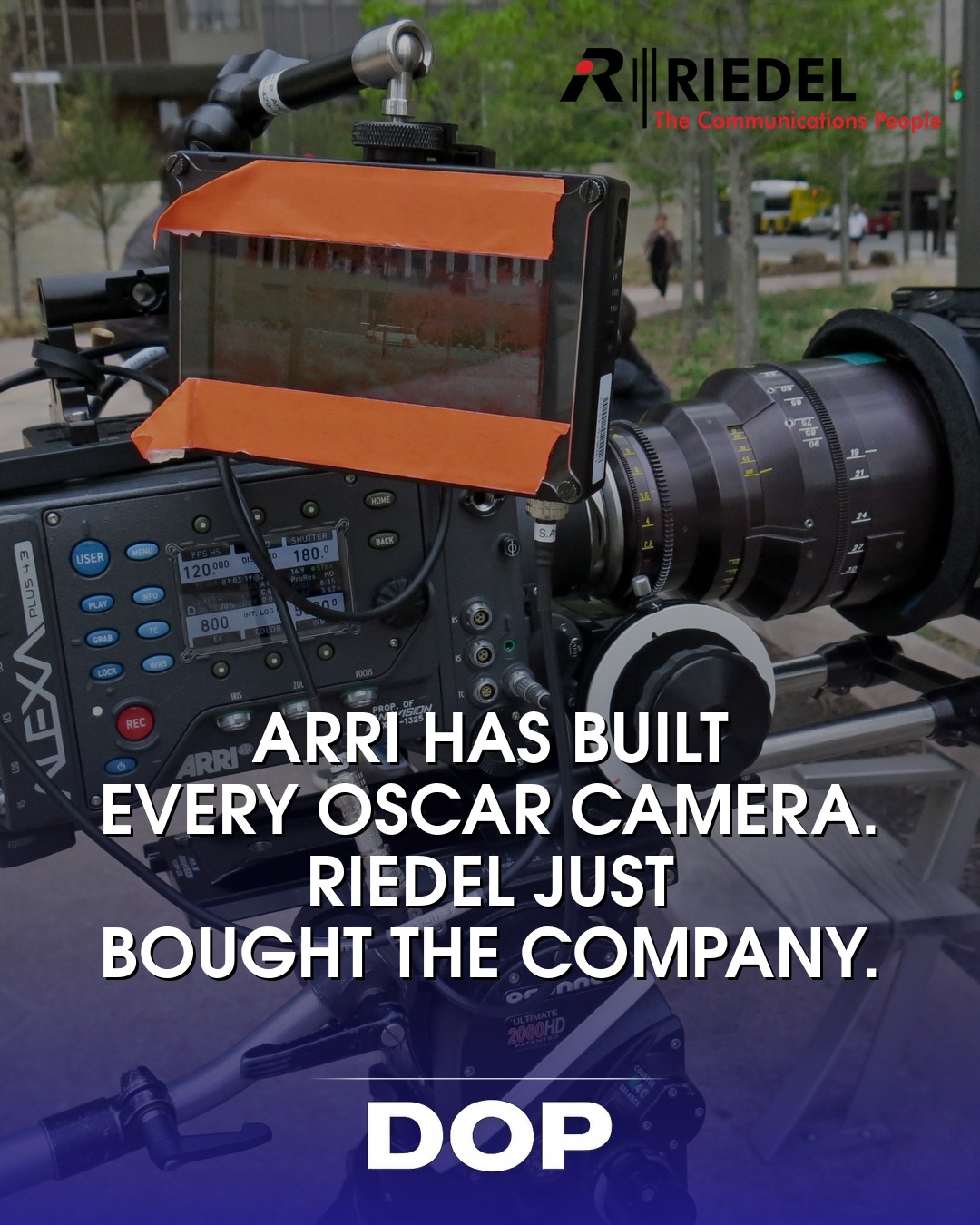
The news reverberated through the industry like a clapperboard strike on an empty soundstage: ARRI, the venerable Munich giant, acquired by Thomas Riedel. For the first time in its 109-year history, the company that has defined cinematic image capture for generations will no longer be in the hands of its founding family. This isn't just a business transaction; it's a profound inflection point for cinematographers, gaffers, and every artisan dedicated to the moving image.
Riedel Communications, a name synonymous with robust real-time media networks, now commands a vertical integration that promises to reshape on-set infrastructure. From the camera sensor to the signal distribution, the potential for seamless, high-performance workflows is immense. One can envision a future where ARRI's legendary image quality is intrinsically linked to Riedel's cutting-edge networking, perhaps leading to unprecedented levels of on-set monitoring, remote collaboration, and data management – a true digital ecosystem from lens to post-production.
The Reign of the Alexa and the Film Resurgence
For over a decade, the ARRI Alexa series has been the undisputed champion of digital cinema. Its organic, film-like aesthetic, robust dynamic range, and intuitive color science have made it the default choice for DPs seeking a reliable, beautiful image. From Roger Deakins' pristine work on Blade Runner 2049 (shot on the Alexa XT Studio) to James Friend's dynamic lensing of All Quiet on the Western Front (Alexa 65), the Alexa has been the silent partner in countless visual masterpieces. Its ubiquity in Best Picture winners since 2012 is a testament to its technical prowess and the trust cinematographers place in its capabilities.
"The ARRI Alexa's enduring appeal lies in its ability to translate the cinematographer's vision with an almost tactile quality, a digital canvas that feels inherently cinematic."
However, the Instagram caption astutely points out a fascinating counter-narrative: the recent resurgence of film. Oppenheimer, a monumental achievement in large-format analog capture, and the bold, gritty texture of Anora, both Best Picture winners, serve as powerful reminders that digital dominance is not absolute. Hoyte van Hoytema's breathtaking 65mm and IMAX 70mm photography on Oppenheimer, utilizing custom lenses and pushing the limits of photochemical processes, was a defiant statement against the digital tide. This isn't Luddism; it's a conscious artistic choice, a pursuit of a specific texture, a unique grain, and a depth of field that film inherently offers.
What Does This Mean for the Craft?
The acquisition prompts us to consider the future of ARRI's product development. Will Riedel's influence push ARRI further into the realm of integrated digital solutions, perhaps accelerating the development of virtual production tools, AI-assisted cinematography, or even more sophisticated on-set networking capabilities? Or will the new ownership recognize the delicate balance ARRI has always maintained between innovation and tradition, continuing to refine its existing camera lines while also acknowledging the enduring artistic value of film capture?
The character of ARRI lenses, from the classic Master Primes to the modern Signature Primes, has long been celebrated for their optical quality and cinematic fall-off. Riedel's focus on real-time signal processing could potentially lead to advancements in lens metadata, real-time distortion correction, or even new approaches to computational photography within the ARRI ecosystem. The synergy could be powerful, but it must be handled with care to preserve the very qualities that make ARRI so revered.
Navigating the Evolving Landscape
For cinematographers, this moment represents both opportunity and uncertainty. Will ARRI continue to prioritize the organic, tactile feel that has defined its digital cameras, or will the push for seamless integration and network efficiency alter its core philosophy? The continued success of film-originated projects like Oppenheimer and Anora underscores that artistic intent, not just technological advancement, drives our choices. It's a powerful reminder that while the tools evolve, the fundamental pursuit of compelling visual storytelling remains paramount.
As Occupy Cinematography, we'll be watching closely. The legacy of ARRI is too significant, its impact on our craft too profound, to treat this acquisition as mere corporate news. It's a pivot point, a new chapter in the ongoing story of how we capture light and emotion, and we eagerly await the unfolding narrative of ARRI under its new stewardship.