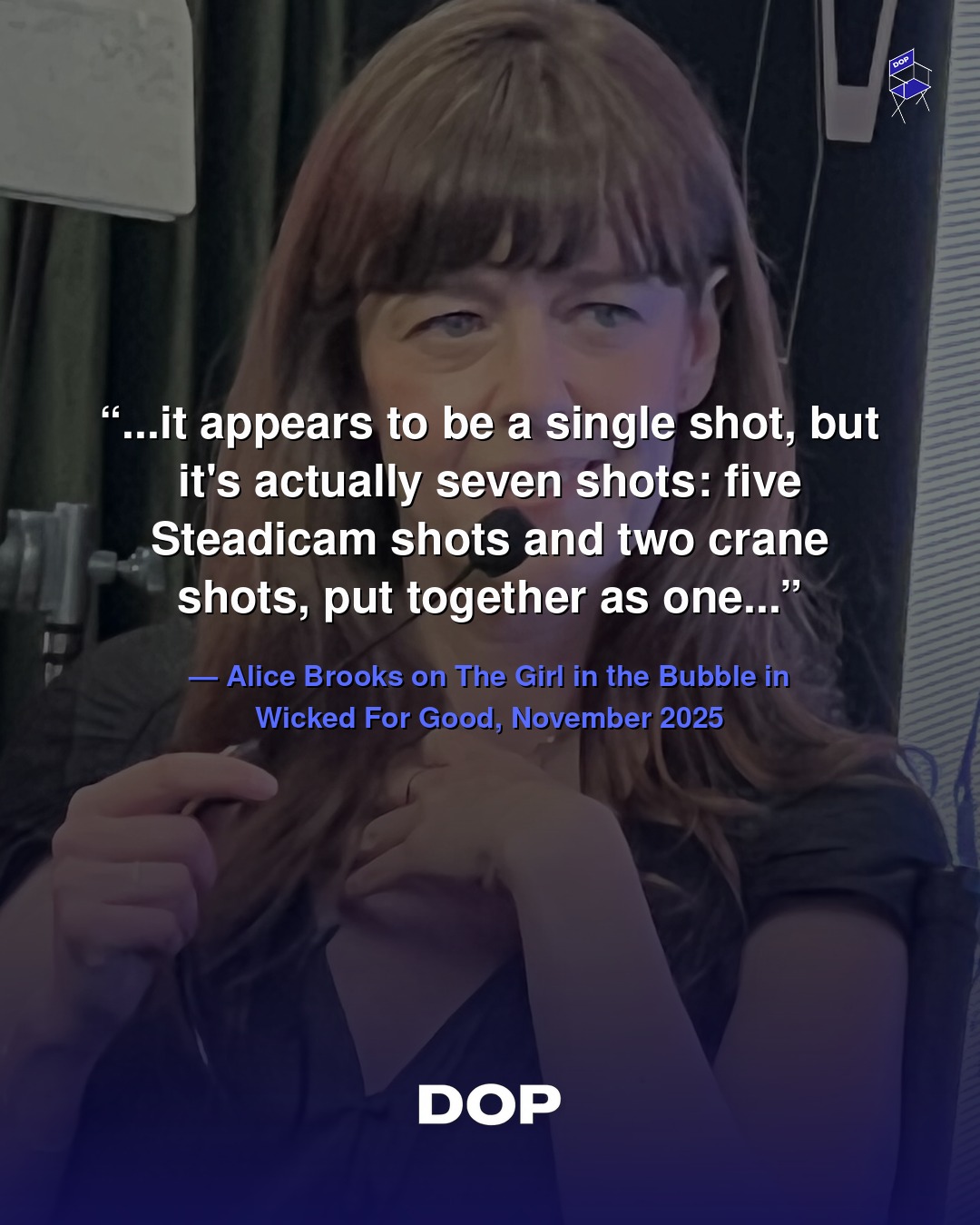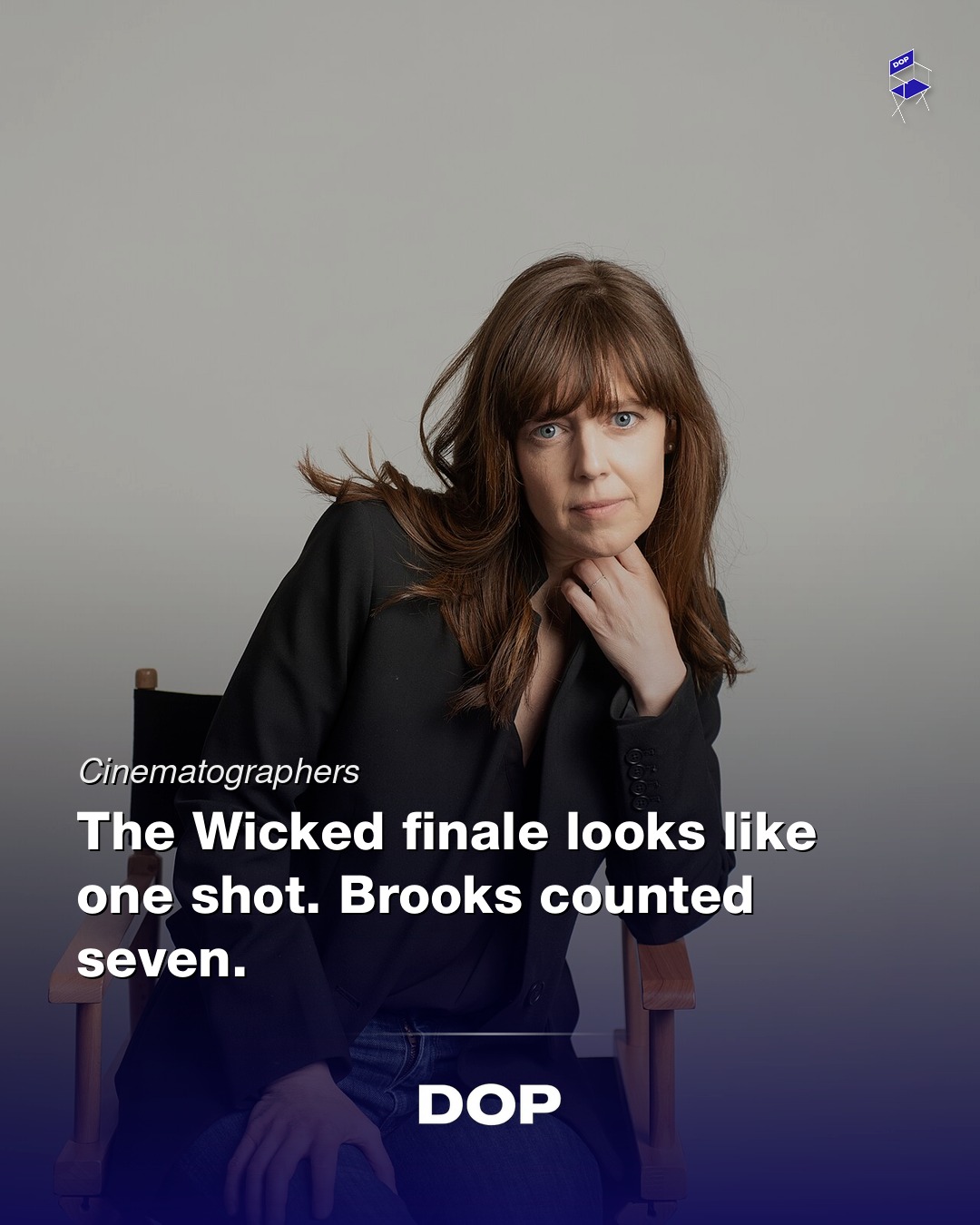
In the realm of modern cinematography, the 'oner', the seemingly uninterrupted long take, has evolved from a sophisticated storytelling device into a potent marketing hook. It’s a badge of honor, a testament to technical virtuosity that often overshadows the narrative itself. Yet, when Alice Brooks, ASC, discussed her work on the sequence known as 'The Girl in the Bubble' from Wicked: For Good, she did something remarkably subversive: she revealed the seams. Brooks openly disclosed that what appears to be a single, flowing take was, in fact, an intricate ballet of seven distinct shots, five on Steadicam, two on crane, seamlessly stitched together across three and a half minutes of song and four reflective surfaces. This transparency isn't just refreshing; it's a profound statement about the true artistry of cinematography, one that values intelligent design over manufactured illusion.
Brooks' decision to detail the 'seam count' is not merely a technical disclosure; it's an educational moment for the craft. DPs are often tasked with upholding the illusion, to guard the secret of their cinematic magic. But by pulling back the curtain, Brooks invites us to appreciate a deeper, more challenging form of filmmaking. The myth of the perfect, unbroken take often overshadows the immense skill required to achieve such fluidity through strategic, invisible cuts. Her approach underscores that the magic isn't in *not cutting*, but in *cutting so flawlessly* that the audience remains utterly immersed, never questioning the flow of time and space.
The Choreography of the Invisible Cut
The sequence itself is a masterclass in camera choreography and spatial awareness. Achieving a continuous, dynamic shot that navigates multiple actors, complex blocking, and the reflective challenges of four mirrors demands meticulous planning and execution. The transitions between a heavy crane and a nimble Steadicam are inherently challenging, requiring precise timing, matched movements, and often, an acute understanding of how digital compositing can enhance practical execution. Imagine the coordination on set: the crane operator smoothly executing a complex path, handing off the visual baton to a Steadicam operator who must instantly match the speed, angle, and rhythm, all while navigating a set designed to appear continuous. These aren't just cuts; they are handoffs, requiring pre-visualization down to the frame.
Brooks, known for her versatile and emotionally resonant work in films like In the Heights and Tick, Tick... Boom!, consistently demonstrates an ability to blend technical precision with narrative empathy. Her visual style often prioritizes the character's journey, using dynamic camera movement not as a gimmick, but as an extension of their emotional state. For Wicked: For Good, the choice to present this sequence as a continuous flow, even if achieved through hidden edits, speaks to the emotional arc of the scene. It immerses the audience directly into the character's experience, allowing the song and performance to unfold without jarring interruptions. This is where the true power of the 'oner', whether real or constructed, lies: in its ability to amplify emotional resonance.
"The breakdown is more impressive than the myth, because matching crane movement to Steadicam across five handoffs is harder than not cutting."
Technical Prowess and Creative Intent
While specific camera and lens choices for this sequence haven't been widely disclosed, Brooks has often favored cameras like the ARRI Alexa Mini LF for its exceptional dynamic range and color science, paired with large-format optics that offer a painterly depth of field. For a musical like Wicked, where vibrant production design and intricate performances are paramount, the ability of large format sensors to render nuanced skin tones and rich color palettes is invaluable. The challenge of shooting with reflective surfaces, especially across multiple 'takes' intended to be seamlessly joined, would necessitate precise lighting control to avoid unwanted reflections and maintain consistent exposure and color temperature across all seven segments. Gaffers and lighting technicians would have been working overtime to ensure every angle, every movement, was perfectly lit, even through the transitions.
The genius of Brooks' revelation is that it shifts the focus from a simple 'how' to a more profound 'why.' Why was it important for this sequence to *feel* like a single take? What narrative purpose did that continuous flow serve? By acknowledging the complexity of its construction, she elevates the discussion from mere technical bragging rights to an appreciation of sophisticated visual storytelling. It’s a testament to the collaborative spirit of filmmaking, the precision of camera operators, the foresight of the first ACs pulling focus across complex moves, the artistry of the lighting team, and the invisible hand of the editor making those seamless joins. Alice Brooks, ASC, once again proves that true mastery isn't about hiding the work, but about making the impossible look effortless, and in doing so, enriching the audience's experience.
Her work on Wicked: For Good, particularly this 'Girl in the Bubble' sequence, should be studied not just for its technical execution but for its philosophical implications. It reminds us that the goal of cinematography is not to impress with overt displays of difficulty, but to serve the story with such grace and precision that the craft itself becomes invisible, even when constructed from many parts. Brooks’ transparency is a gift to aspiring DPs and film enthusiasts alike, demystifying the process while simultaneously deepening our respect for the sheer ingenuity involved in crafting cinematic magic.
This article contains affiliate links. We may earn a small commission at no extra cost to you. Learn more.