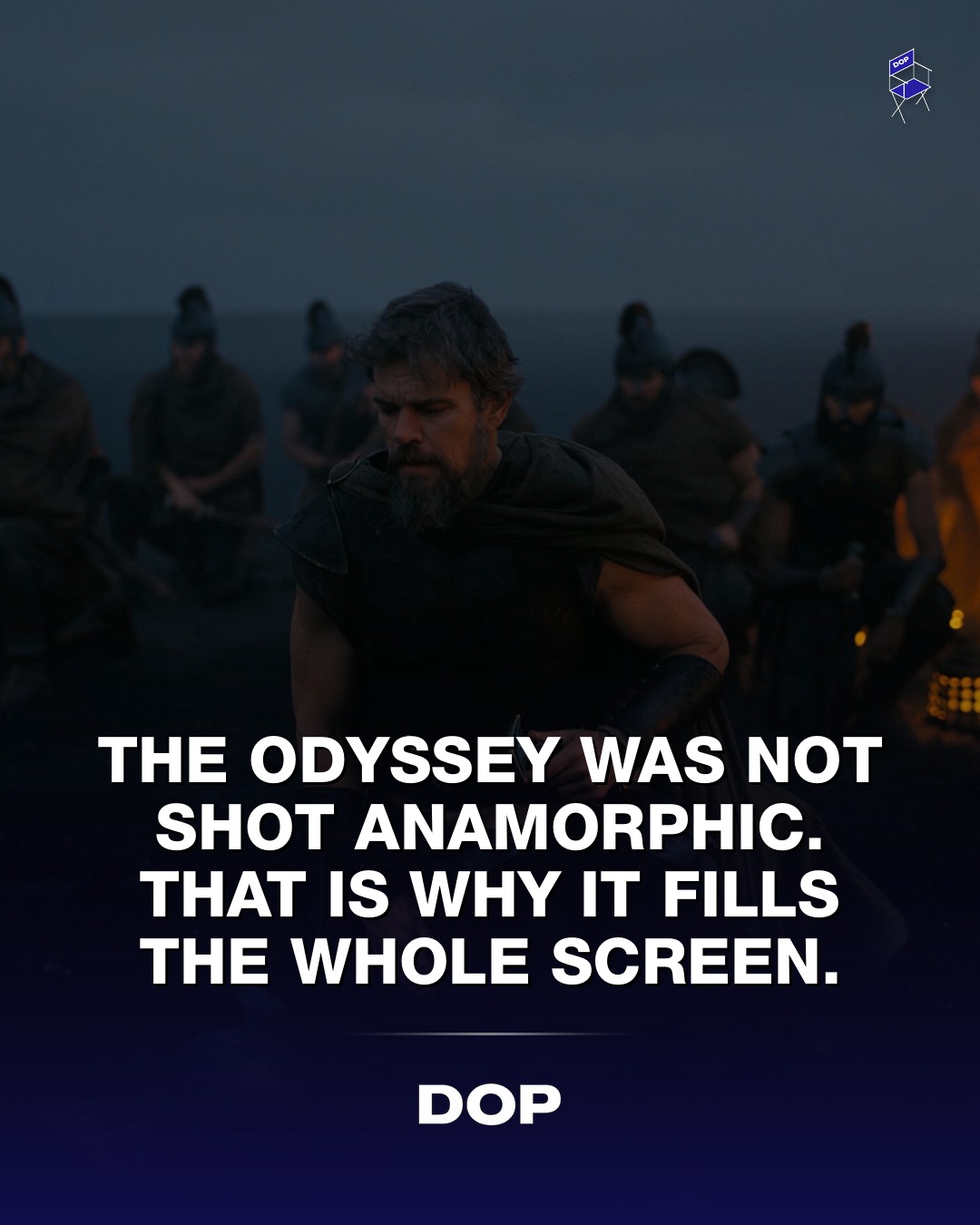
In the vibrant, often rumor-filled world of cinematography, certain claims can take root and spread like wildfire, even when they defy the very physics of filmmaking. Such was the case with the persistent notion that Christopher Nolan's epic, The Odyssey, was shot on anamorphic lenses. While the film’s breathtaking visuals and unique aesthetic undoubtedly invite speculation, a closer look at the technical specifications, particularly its groundbreaking use of IMAX 15/65 film, quickly dispels this intriguing but ultimately incorrect theory.
The core of the misunderstanding often stems from a perceived softness or a particular quality in the image that some viewers mistakenly attribute to anamorphic glass. However, the true culprit, or rather, the true artistic choice, lies in the sheer scale of the IMAX 15/65 negative. This format, with its massive surface area, inherently produces an incredibly shallow depth of field. When projected at its native 1.43:1 aspect ratio, the full, uncropped canvas that The Odyssey was trailblazingly designed for, the visual information captured is immense, and the planes of focus become incredibly narrow. This isn't a flaw; it's a fundamental characteristic of working with such a large film stock, a deliberate choice by Nolan and his cinematographers to immerse the audience in a hyper-realistic, yet dreamlike, visual experience.
The Geometry of IMAX and Anamorphic
Let's break down the technical impossibility of the anamorphic rumor. IMAX 15/65 film is, by definition, a spherical format. It captures an image that, when projected without any additional optical manipulation, maintains its original geometric proportions. If one were to apply a 2x anamorphic squeeze to this negative, the resulting de-squeezed aspect ratio would be approximately 2.86:1. This is dramatically wider than the 1.43:1 aspect ratio at which The Odyssey is presented in its purest IMAX form. The mathematics simply don't align. The film’s monumental canvas, designed to fill the towering IMAX screens, is a testament to spherical capture on an unprecedented scale, not anamorphic distortion.
The allure of anamorphic lenses often lies in their unique optical characteristics: the oval bokeh, the distinctive lens flares, and the way they render faces with a subtle elongation. None of these signature traits are overtly present in The Odyssey. Instead, the film showcases the pristine clarity, immense resolution, and profound sense of scale that only IMAX 15/65 spherical capture can deliver. It’s a clean, almost clinical fidelity that, paradoxically, contributes to its otherworldly feel. The 'softness' people perceive is not an optical aberration but a consequence of the incredibly precise focus pulling required for such a shallow depth of field.
The Human Element: Focus Pulling on a Grand Scale
This brings us to a crucial, often overlooked, aspect of shooting on IMAX: the demanding craft of focus pulling. Unlike modern digital cinema cameras with their sophisticated autofocus systems or even smaller film formats where depth of field can be more forgiving, an IMAX 15/65 camera offers no such luxuries. Every single focus adjustment is manual, executed by a highly skilled 1st Assistant Camera (1st AC). Imagine the pressure: a massive, heavy camera, often mounted on complex rigs, capturing a scene with actors moving within a shallow plane of focus, all while the 1st AC is judging distances by hand, often in low light or challenging environments.
"The 'softness' viewers report is depth of field. A negative that size gives very little of it, and nothing on an IMAX camera is automated. A first assistant judges focus by hand while camera and actor both move."
Any perceived 'softness' in The Odyssey, therefore, is not a result of anamorphic lenses but a testament to the immense challenge and artistry involved in maintaining critical focus on a format that is inherently unforgiving. It speaks volumes about the precision and dedication of the camera department, operating at the absolute pinnacle of their craft. Nolan, known for his commitment to practical effects and in-camera realism, embraces these challenges, understanding that they contribute to the raw, visceral impact of his films.
In conclusion, while the anamorphic rumor surrounding The Odyssey is an understandable misinterpretation of its unique visual texture, the truth is far more compelling. The film stands as a landmark achievement in cinematography, not for its use of esoteric glass, but for its bold and uncompromising embrace of IMAX 15/65 film. It’s a celebration of spherical capture on the grandest possible scale, showcasing the incredible resolution, shallow depth of field, and the sheer human skill required to harness such a magnificent medium. For cinematographers and film enthusiasts alike, understanding these technical nuances enriches our appreciation for the artistry behind the lens, proving once again that sometimes, the most profound visual effects are achieved through purity of format and mastery of craft.
This article contains affiliate links. We may earn a small commission at no extra cost to you. Learn more.